
Debt can quietly affect every part of your life. Even during good moments, unpaid bills and collection notices can stay in the back of your mind. For many people in Georgia, wage garnishment makes financial stress even harder because part of their paycheck is taken before they even receive it.
If you are researching bankruptcy vs wage garnishment, you are likely looking for answers, relief, and a way to regain control of your finances.
The difference is simple:
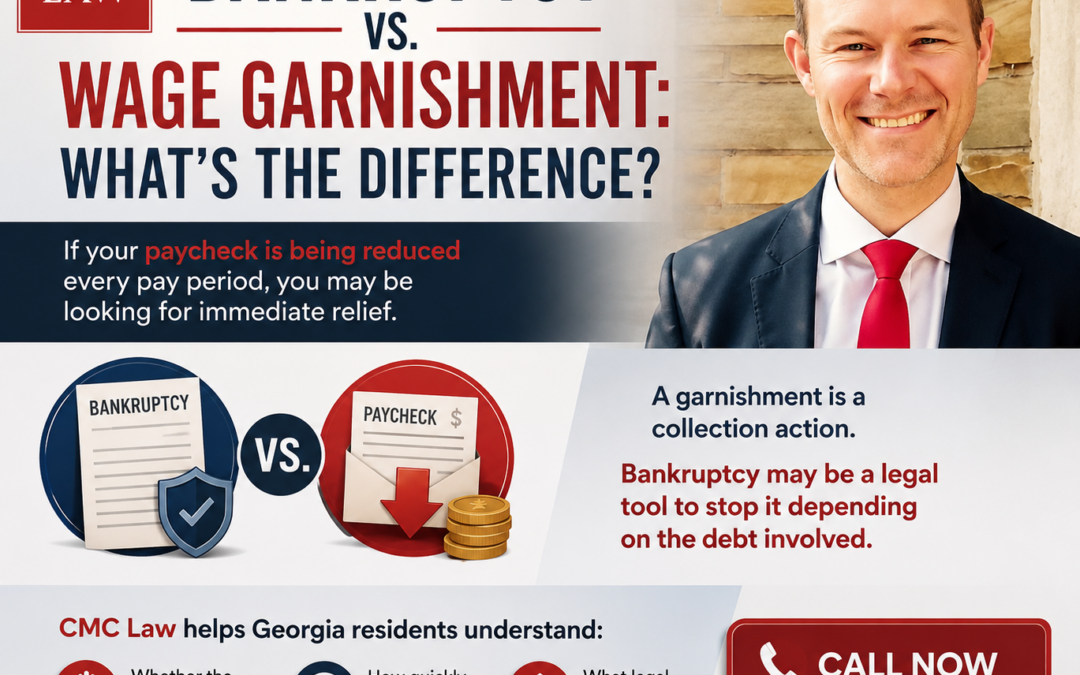
Wage garnishment is a collection method used by creditors to take money directly from your paycheck. Bankruptcy is a legal process that may help stop garnishment and provide long-term debt relief.
We help individuals and families throughout Atlanta understand their legal options and work toward financial peace of mind.
What Is Wage Garnishment?
Wage garnishment happens when a creditor collects unpaid debt directly from your paycheck through a legal order.
After obtaining a court judgment, creditors may require your employer to withhold part of your wages and send it toward your debt.
Common Reasons for Wage Garnishment
In Georgia, wage garnishment may happen because of:
- Credit card debt
- Medical bills
- Personal loans
- Tax debt
- Student loans
- Child support
- Court judgments
For many people, garnishment creates even more financial pressure because essential expenses still need to be paid.
According to the Consumer Financial Protection Bureau, wage garnishment can significantly affect a household’s ability to manage daily expenses.
What Is Bankruptcy?
Bankruptcy is a federal legal process designed to help people who cannot repay their debts.
Instead of allowing creditors to continue aggressive collection efforts, bankruptcy may provide legal protections and a path toward financial recovery.
The Most Common Types of Bankruptcy
Chapter 7 Bankruptcy
Chapter 7 Bankruptcy in Georgia may help eliminate qualifying unsecured debts, including:
- Credit card debt
- Medical debt
- Personal loans
Chapter 7 is often used by individuals with limited disposable income who need a fresh financial start.
Chapter 13 Bankruptcy
Chapter 13 Bankruptcy in Georgia creates a structured repayment plan that usually lasts three to five years.
This option may help people who:
- Have regular income
- Need time to catch up on bills
- Want to keep their home or vehicle
- Are facing foreclosure or repossession
Can Bankruptcy Stop Wage Garnishment?
Yes. In many cases, bankruptcy can stop wage garnishment immediately through a legal protection called the automatic stay.
What Is the Automatic Stay?
The automatic stay goes into effect once a bankruptcy case is filed. It can temporarily stop many collection activities, including:
- Wage garnishments
- Collection calls
- Lawsuits
- Foreclosure actions
- Vehicle repossessions
This legal protection often gives people immediate financial breathing room.
However, some garnishments may continue, especially for child support or certain tax obligations.
The United States Courts Bankruptcy Basics explains how bankruptcy protections work under federal law.
Bankruptcy vs Wage Garnishment: Key Differences
Purpose
Wage garnishment helps creditors collect money.
Bankruptcy helps individuals manage or eliminate overwhelming debt.
Impact on Your Income
Garnishment reduces your paycheck immediately.
Bankruptcy may help protect income by stopping certain collection actions.
Long-Term Financial Relief
Garnishment only addresses one debt at a time.
Bankruptcy may address multiple debts and potentially eliminate qualifying balances altogether.
Legal Protections
Wage garnishment benefits creditors.
Bankruptcy provides protections for debtors through federal law.
How Wage Garnishment Affects Daily Life
When part of your paycheck disappears before you receive it, basic expenses become harder to manage.
Many people dealing with garnishment struggle to pay for:
- Rent or mortgage payments
- Groceries
- Utility bills
- Transportation
- Childcare
- Medical expenses
The emotional stress can also become overwhelming. Financial pressure often affects relationships, sleep, mental health, and work performance.
We understand that debt problems affect real people and families, not just finances on paper.
When Should You Consider Bankruptcy?
You may want to speak with a bankruptcy attorney if:
- Your wages are already being garnished
- You cannot keep up with debt payments
- Creditors continue calling daily
- You rely on credit cards for essentials
- You are facing foreclosure or repossession
- Your debt continues growing despite making payments
Taking action early may provide more legal options and help protect your financial future.
Is Bankruptcy Better Than Wage Garnishment?
For many people facing overwhelming debt, bankruptcy may offer broader and longer-lasting relief than wage garnishment alone.
Instead of losing part of your paycheck indefinitely, bankruptcy may help:
- Stop collections
- Reduce financial stress
- Eliminate qualifying debts
- Create manageable repayment options
- Protect certain assets
Every financial situation is different, which is why personalized legal advice matters.
Will Bankruptcy Ruin Your Credit Forever?
No. Bankruptcy affects your credit, but it does not permanently destroy your financial future.
In fact, many people begin rebuilding their credit sooner than expected after resolving overwhelming debt.
After bankruptcy, individuals often focus on:
- Better budgeting habits
- Responsible credit use
- Saving money
- Long-term financial planning
CMC Law also helps clients understand strategies for staying debt-free after bankruptcy and building a stronger financial foundation.
Why Acting Early Matters
Debt problems usually become more expensive over time because of:
- Interest
- Late fees
- Collection costs
- Lawsuits
- Garnishments
Waiting too long may reduce your available options.
Speaking with a bankruptcy attorney early may help you understand whether bankruptcy, debt negotiation, or another solution makes the most sense for your situation.
How CMC Law Helps Georgia Clients
Our mission is to help people move toward financial peace of mind.
We help clients understand:
- Whether bankruptcy may stop garnishment
- Which bankruptcy chapter may fit their needs
- What debts may qualify for discharge
- How to protect their income and assets
- How to rebuild financially after bankruptcy
Financial freedom is achievable with the right legal guidance and long-term planning.
Conclusion
Understanding bankruptcy vs wage garnishment is important when debt starts affecting your paycheck and daily life.
Wage garnishment is a collection tool used by creditors. Bankruptcy is a legal process that may help stop garnishment, reduce financial pressure, and create a path toward long-term debt relief.
If you are struggling with debt in Georgia, you do not have to face it alone.
CMC Law helps individuals and families throughout Atlanta and Georgia explore solutions that may help them protect their income and move toward financial stability.
Frequently Asked Questions About Bankruptcy vs Wage Garnishment
Can bankruptcy stop wage garnishment immediately?
In many situations, yes. Filing bankruptcy triggers the automatic stay, which may stop wage garnishment and other collection activities. Some obligations, such as child support, may still continue.
How much of my paycheck can be garnished in Georgia?
The amount depends on federal and Georgia laws, your disposable income, and the type of debt involved. An attorney can review your situation and explain applicable limits.
Is Chapter 7 or Chapter 13 better for stopping garnishment?
It depends on your financial circumstances. Chapter 7 may eliminate qualifying debts quickly, while Chapter 13 creates a repayment plan for people with steady income.
Can wage garnishment happen without notice?
Most creditors must first obtain a court judgment before garnishing wages. However, certain debts like federal student loans or taxes may follow different procedures.
Will bankruptcy erase all my debts?
No. Some debts may not qualify for discharge, including child support, certain taxes, and some student loans.
Does filing bankruptcy mean losing everything I own?
Not necessarily. Bankruptcy exemptions may protect certain homes, vehicles, retirement accounts, and personal belongings depending on your case.
How long does bankruptcy stay on your credit report?
Chapter 7 bankruptcy may remain on a credit report for up to 10 years, while Chapter 13 may remain for up to 7 years. However, many people begin rebuilding credit before that time passes.
Should I talk to a lawyer before my wages are garnished?
Yes. Speaking with a bankruptcy attorney early may help you understand your options before collection actions become more serious.